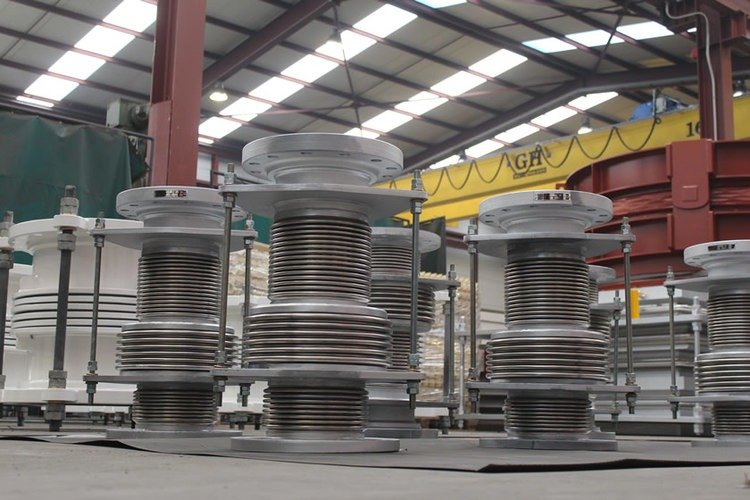

Mechanical systems employ expansion joint bellows, which are essential components, to handle movement, vibration, and thermal expansion. These bellows aid to guarantee structural integrity and stop harm to ducts, pipes, and other linked systems. Depending on the use and specific needs, expansion joint bellows is created of several materials, including metal, rubber, and fabric. Every kind has its own benefits, drawbacks, and best use cases. This article highlights the main differences among different types of products from the present top-notch Expansion bellows manufacturer to help you choose cautiously.
Table of Contents
Knowing Expansion Joint Bellows
Flexible connections known as expansion joint bellows take up dimensional variations brought on by motorised vibrations, heaviness changes, and temperature dissimilarities among other causes. Often used in pipelines, HVAC methods, power plants, and industrial equipment, such bellows help to decrease stress and protection parts.
The performance, lifetime, and price of the system are directly affected by the material chosen for the bellows, so it is vital. Metal, rubber, and fabric expansion joint bellows should be examined more closely and their features compared.
Bellows of Metal Expansion Joint
Usually, metal bellows are prepared from Inconel, stainless steel, or additional premium alloys. They are meant to tolerate plain temperatures, higher pressure, and antagonistic situations.
Benefits
- Endurance
- Resistant to wear and corrosion, metal bellows are appropriate for severe working conditions.
- Resistance to Temperature
- Ideal for uses requiring steam, hot gasses, or high-temperature fluids, metal bellows can survive high temperatures.
- Handling Pressure
- Their strong design lets them withstand high pressures without failure or distortion.
- Personalization
- Engineered metal bellows may fit certain design criteria including axial, lateral, and rotational motions.
Limitations
- Cost: Metal bellows are somewhat costly given their material and manufacturing complexity.
- Expense: Compared to cloth and rubber bellows, they have less flexibility.
- Vibration Sensitivity: Metal bellows could pass vibrations on to impact linked parts.
Applications
- Refineries and power plants
- Steam systems at high pressure
- Industrial machinery exhaust systems
- Applications in aerospace and defense
Rubber Expansion Joint Bellows
Made of elastomers such EPDM, Neoprene, or Nitrile, rubber bellows Their lightweight and flexible character fits them for a great variety of uses.
Benefits
- Rubber bellows can tolerate more movement, including axial and lateral displacement, as well as torsion.
- Rubber naturally absorbs vibrations, therefore it lowers stress on linked parts.
- Generally speaking, rubber bellows are more cheap than metal bellows.
- Some kinds of rubber are resistant to chemicals, hence some sorts of rubber are perfect for chemical processing sectors.
Limitations
- Rubber bellows are less temperature resistant than metal bellows, hence they are not appropriate for high-temperature uses.
- They are not as strong as metal bellows and may not tolerate very high pressures.
- Over time, prolonged exposure to UV radiation and ozone may destroy rubber bellows.
Uses:
- Heating, ventilation, and air conditioning systems
- Plants for chemical processing
- Pipelines for wastewater and water
- Systems for transferring low-pressure fluids
- Fabric Expansion Joint Bellow
- Layers of heat-resistant materials include fiberglass, silicone, or PTFE make up fabric bellows. Light and very flexible.
Benefits
- Fabric bellows can withstand severe temperatures, including intense heat and cryogenic conditions.
- Their lightweight design lessens strain on supporting structures.
- Fabric bellows have great flexibility and can handle a broad spectrum of motions.
- Rust some fabric materials are resistant to chemicals and corrosion.
Limitations
- Fabric bellows may need frequent repair since they are less durable than metal or rubber bellows.
- Pressure Handling: Fabric bellows are not appropriate for high-pressure uses.
- Fabric materials are more prone to mechanical wear and abrasion.
Perfect Applications
- Boilers and gas turbines
- Systems of exhaust
- Uses with low-pressure needs
- Thermal insulating systems
Which Type is Best for Your Application?
Choosing the correct kind of expansion joint bellows relies on many factors, such as operational circumstances, temperature, pressure, movement needs, and cost. Choose the finest expansion bellows manufacturer wisely for your needs.